


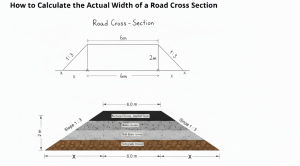
How to Calculate the Actual Width of a Road Cross Section (With Example)
Designing a road cross-section is one of the important steps in highway engineering. to Understanding how to calculate the actual width of a road including side slopes is most important.
In this article, we’ll go through a simple and clear method to determine the actual total width of a road cross-section, step by step with an example
What is a Road Cross Section?
A road cross section represents a vertical cut through the road, showing different layers, slopes, and dimensions such as:
Top width (carriageway)
Side slopes or embankments
Road shoulders and ditches
This helps to determine earthwork quantities, drainage levels, and stability of slopes.
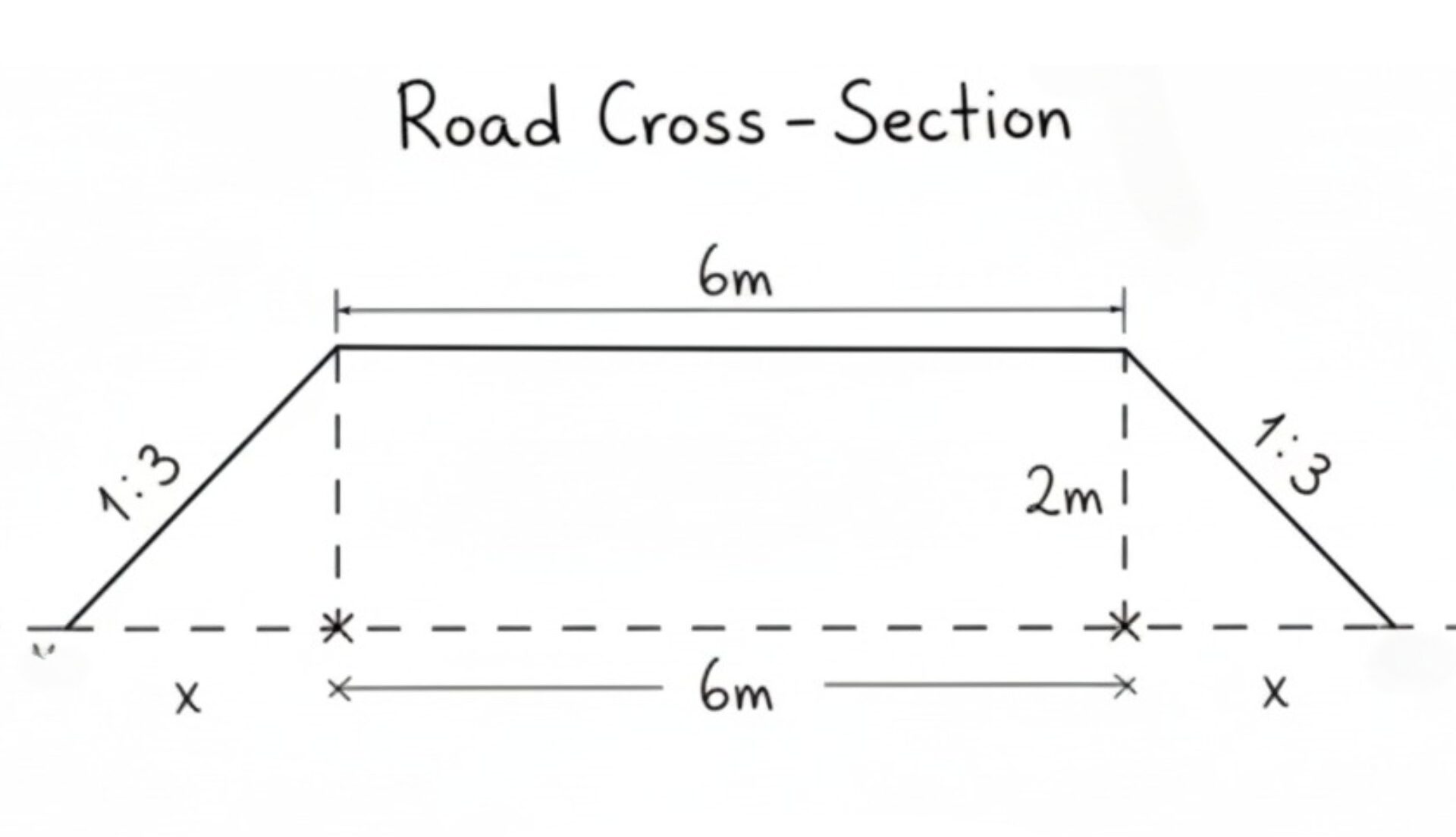
As Shown the image
Road top width = 6 m
Left side height = 2 m
Right side height = 2 m
Side slopes = 1 : 3 (1 vertical → 3 horizontal)
Step 1: Calculate Horizontal Distance for Each Slope
Left & Right Side:
Vertical height= 2 m
Given Slope = 1 : 3
Actual Horizontal Distance = x
So,
Horizontal Slope = Actual vertical slope
Horizontal Distance Actual Horizontal Distance (x)
1 / 3 = 2 / x
x * 1 = 3 * 2 , x = 6m
Each side extends 6 meters horizontally from the edge of the carriageway
Step 2: Calculate the Total Road Width
Total Width = “x” left+ Formation Width + “x” right
So Total Width = 6 + 6 + 6 = 18 m
✅ Therefore, the actual total width of the road cross section is 18 meters.
Why This Calculation Is Important
Accurately calculating the road cross-section width is important for:
Estimating earthwork quantities (cutting and filling)
Preparing BOQ (Bill of Quantities)
Cost estimation and resource planning
Ensuring proper drainage design and slope stability